
 By Satyakam
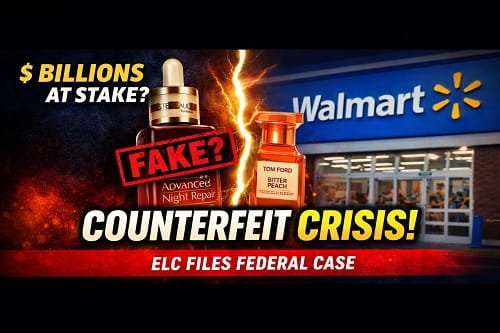
 In February 2026, The Estée Lauder Companies (ELC) filed a federal trademark infringement and counterfeiting lawsuit against Walmart, setting off a legal battle that could reshape how major online marketplaces handle luxury beauty products. The complaint was filed in the U.S. District Court for the Central District of California and centers on serious allegations: that counterfeit versions of Estée Lauder’s high-end brands were being sold through Walmart’s online marketplace.
At the heart of the dispute is a simple but powerful question—who is responsible when fake products appear on a digital shelf?
The Core Allegations
According to court filings, The Estée Lauder Companies claims that counterfeit versions of several of its prestige brands were sold to consumers via Walmart’s website. These brands include Tom Ford, Le Labo, La Mer, Clinique, Aveda, and Estée Lauder itself.
The lawsuit highlights specific examples, including counterfeit versions of Advanced Night Repair serum, Le Labo’s well-known Santal 33 fragrance, and Tom Ford’s popular Bitter Peach perfume. ELC alleges that these knockoffs used branding that was “identical or substantially indistinguishable” from the authentic products. In some cases, packaging, labeling, and logos reportedly mimicked the originals so closely that ordinary buyers would struggle to tell the difference.
For a company built on brand prestige and product trust, those claims strike at the core of its identity.
Marketplace Model Under Scrutiny
Walmart’s online marketplace operates similarly to other large e-commerce platforms. Third-party sellers can list products, while Walmart processes payments and, in many cases, manages checkout and returns. ELC argues that this structure creates confusion for consumers.
In the complaint, Estée Lauder contends that Walmart does “very little” to ensure that products sold through its marketplace are authentic. Because the checkout process, customer service, and returns are handled within Walmart’s ecosystem, shoppers may reasonably assume they are buying directly from Walmart itself.
That perceived endorsement, ELC claims, gives counterfeiters a powerful advantage. When a trusted retailer’s name is attached to a transaction, customers are less likely to question authenticity.
The lawsuit essentially challenges the idea that a marketplace operator can distance itself from the products sold under its digital roof.
What Estée Lauder Wants
ELC is seeking unspecified monetary damages. More importantly, it wants a court order that would stop Walmart from selling the alleged counterfeit products. The company is also asking for the recall and destruction of any remaining inventory tied to the disputed items.
Trademark infringement cases often hinge on whether a company took reasonable steps to prevent counterfeit activity. If the court finds that Walmart’s oversight measures were insufficient, the financial and reputational consequences could be significant.
Beyond compensation, the case may also establish clearer expectations for large retailers operating third-party marketplaces.
Walmart’s Position
Walmart has responded publicly by stating it maintains a “zero-tolerance” policy toward counterfeit goods. The company said it is aware of the complaint and will respond appropriately once formally served in court.
Major online platforms typically argue that they actively monitor listings, remove suspicious sellers, and cooperate with brand owners. Walmart is expected to emphasize its internal safeguards and anti-counterfeiting programs in its legal defense.
The company may also argue that responsibility lies primarily with the third-party sellers who allegedly listed the fake goods.
Bigger Implications for E-Commerce
This lawsuit arrives at a time when online marketplaces dominate retail. Luxury brands have long battled counterfeiters, but the scale of digital commerce has made the fight more complex.
When a counterfeit product slips through, the damage is not only financial. Consumers may experience allergic reactions, ineffective formulations, or safety risks—especially with skincare and fragrance products applied directly to the body. For prestige beauty brands, even a small number of bad experiences can erode years of trust.
If Estée Lauder succeeds, the case could push marketplaces to adopt stricter verification systems, more aggressive seller vetting, and clearer labeling that distinguishes third-party listings from retailer-owned inventory.
On the other hand, if Walmart prevails, it may reinforce existing legal protections for marketplace operators.
What Happens Next
Federal trademark cases can take months or even years to resolve. Discovery, evidence review, and possible settlement talks will likely follow. Both companies have strong incentives to defend their reputations carefully.
For now, the lawsuit stands as a reminder of how fragile brand trust can be in the digital age. Consumers expect authenticity, especially when buying premium products. When that trust is questioned, even giants like Estée Lauder and Walmart find themselves in court.

Satyakam Pradhan is a professional law content writer with extensive experience in creating clear, well-researched, and reader-friendly legal content. With a strong understanding of laws and legal procedures.