
 By Satyakam
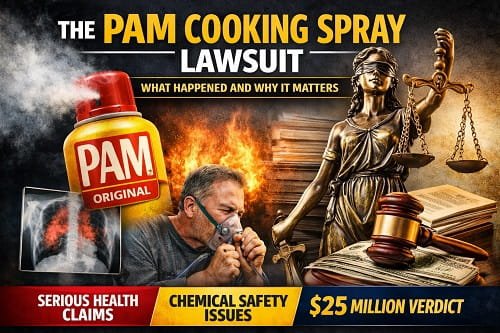
 A recent court verdict in the United States has turned a household staple into headline news. A Los Angeles jury ordered Conagra Brands, the maker of PAM cooking spray, to pay $25 million to a man who says his long-term use of the product left him with a serious lung disease. This decision has stirred debate, sparked legal discussions, and thrust a familiar kitchen product into the spotlight.
What Exactly Happened?
In early February 2026, a jury in California handed down a large verdict in favor of Roland Esparza, a plaintiff who argued that years of using PAM butter-flavored cooking spray caused him to develop bronchiolitis obliterans — a severe respiratory condition sometimes called “popcorn lung.”
Esparza claimed he used the cooking spray multiple times a day for nearly three decades. During the trial, his lawyers argued that the product contained a chemical called diacetyl, which can harm lungs when inhaled repeatedly over long periods. The jury agreed that the product’s warnings weren’t sufficient and that Conagra should be responsible for his injuries.
The judges also found that the product didn’t perform as safely as an ordinary consumer would expect and that Conagra failed to adequately warn about potential risks. That finding is significant because it forms the legal basis for product liability claims.
Why It Matters
This case is catching public attention for several reasons:
● Size of the Award: A $25 million verdict in a consumer product case isn’t everyday news. It’s drawing attention because the amount is substantial — and because it suggests juries may be willing to hold major companies accountable for products many people take for granted.
● Chemical Safety Debate: The case revolves around how chemicals used for flavoring behave when aerosolized and heated in a home kitchen. Even though Conagra says PAM has been free of diacetyl for years, the jurors weren’t convinced that earlier versions were safe or that warnings were clear enough.
● Consumer Trust: Millions of people use PAM and similar sprays daily for cooking. When a product that feels familiar is involved in a major lawsuit, it naturally gets attention — especially online and on social media.
● Potential Legal Ripple Effect: Lawyers and legal experts are watching to see whether this case will spark more lawsuits against Conagra or other companies that make aerosol cooking sprays. A big verdict can motivate other claimants to file their own suits.
What Conagra Says
The company strongly denies wrongdoing and insists its products are safe when used as directed. Conagra has pointed out that PAM was reformulated in 2009 to remove diacetyl, a step it argues already reduced any risk.
Conagra also maintains that PAM comes with clear usage labels and warnings about flammability and proper storage, and that scientific evidence doesn’t support a clear link between normal cooking spray use and lung disease. Those defenses were part of the trial, but the jury ultimately found otherwise.
Context: Other Legal Battles Involving Cooking Sprays
This isn’t the first time PAM or similar products have faced legal scrutiny. In the past few years, there have been numerous lawsuits claiming that certain aerosol cooking spray cans could explode or catch fire, leading to serious burns and property damage — and juries have awarded damages to other plaintiffs in some of those cases.
That history adds to why this latest verdict stands out. It shows that legal challenges around cooking spray safety aren’t limited to one type of harm — they span everything from burn injuries to chronic lung issues.
What Consumers Should Know
For now, experts suggest that PAM and similar products are safe for most people when used according to the label. Still, this case highlights how cumulative exposure and chemical reactions during cooking may raise questions about warning labels and risk communication.
If you use aerosol cooking sprays frequently and are concerned, reading up on product warnings and staying informed about evolving safety discussions can help you make choices that feel right for your kitchen. And if you think you’ve experienced harm from a product like this, legal advice from a professional can clarify your options.
Why It’s Trending
This lawsuit is trending because it touches on a few things many people care about: everyday safety, corporate accountability, and the idea that even common products can have hidden risks. A big verdict like this spreads quickly on news sites, social feeds, and legal forums — especially when it involves a product found in millions of kitchens.
Whether this case will change the way companies label aerosol products, or how future lawsuits unfold, remains to be seen — but for now it’s a reminder that even the familiar can become controversial when public health is at stake.

Satyakam Pradhan is a professional law content writer with extensive experience in creating clear, well-researched, and reader-friendly legal content. With a strong understanding of laws and legal procedures.