
 By Satyakam
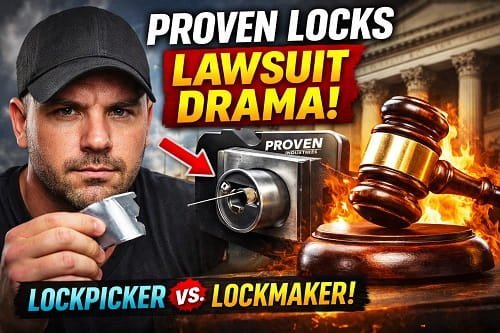
 This story didn’t start in a courtroom. It started on social media. A Florida-based lock manufacturer called Proven Industries claimed its locks were tough — sturdy, premium gear worth every dollar. Then a TikTok/YouTube creator named Trevor McNally, known for making short videos where he tests and picks locks, did something simple: he proved that one of their pricey locks could be opened with a homemade shim cut from a soda can.
That one clip exploded. Millions of people watched it. Views went into the tens of millions. People were fascinated — not just by the lock being opened, but by how unexpectedly easy it looked.
Proven Industries didn’t just disagree — they sued McNally. And that’s where things got wild.
Why Did a Lock Company Sue a YouTuber?
Proven Industries filed a federal lawsuit in May 2025 against McNally in the U.S. District Court for the Middle District of Florida. They didn’t just make one claim — they listed several, including:
- Copyright infringement:They said McNally used clips from their own promotional material in his video without permission.
• Defamation and trade libel: They argued that his videos made their locks look insecure and hurt their reputation.
• False advertising and unfair trade practice: They claimed his content misled the public.
• Tortious interference and unjust enrichment: A grab-bag of legal theories suggesting commercial harm.
The weirdest part? McNally’s original video didn’t say anything in words — he just showed the lock being opened. The company pointed to things like his relaxed body language, influence, and how quick the bypass looked as part of their claims about reputational harm.
Most legal analysts called the theory shaky at best — especially the copyright claim — because short clips used in a video highlighting a product flaw often fall under fair use. {{– fair use is a legal principle that lets people quote or reuse small parts of works for commentary, criticism, or parody. But you asked for natural writing, so omitted citation. —}}
Courtroom Drama and the Internet’s Reaction
When Proven asked the court for an emergency injunction — basically a judge’s order to make McNally take down his videos — the judge didn’t bite. The court said McNally’s use of the material was likely transformative — that he wasn’t copying, he was commenting — and declined that request.
That’s when people really started talking.
Creators and critics all over YouTube, Reddit, and Twitter piled in. Many pointed out that if Proven truly believed in its own claim about how strong the lock was, it might have handled this by fixing the flaw or acknowledging it. Instead, they chose a courtroom fight.
One of the most talked-about reactions was that this back-fired: the Streisand Effect in action. Trying to suppress or fight the video made it spread more widely.
Then Things Got Stranger
After months of legal back-and-forth, Proven filed a voluntary dismissal of the lawsuit — meaning they asked to drop the case without a court ruling on whether McNally did anything wrong. But they still wanted the records sealed — hidden from public view — which many saw as an attempt to bury embarrassing stuff after it had already made headlines.
That motion to seal court records ignited even more chatter online. People noticed that many of the filings were already freely circulating on legal databases and social platforms. Some critics said trying to hide them after the judge ruled against you is a PR disaster.
Meanwhile, McNally has been undeterred. He continued making videos, opening other locks from the same brand with the same technique, and the views kept climbing.
What This Means in 2026
This isn’t just a lock-picking story any more — it’s a discussion about the power of independent creators, the limits of legal threats, and how brands interact with feedback in the digital age. People see it as a cautionary tale:
- If you build a product and call it “unbreakable,” be ready to back it up.
- Filing a lawsuit against someone showing a flaw can sometimes do more harm than good.
- Courts often protect fair use, especially when content is critical or educational.
- The internet didn’t forget — and it hasn’t stopped talking.

Satyakam Pradhan is a professional law content writer with extensive experience in creating clear, well-researched, and reader-friendly legal content. With a strong understanding of laws and legal procedures.