
 By Satyakam
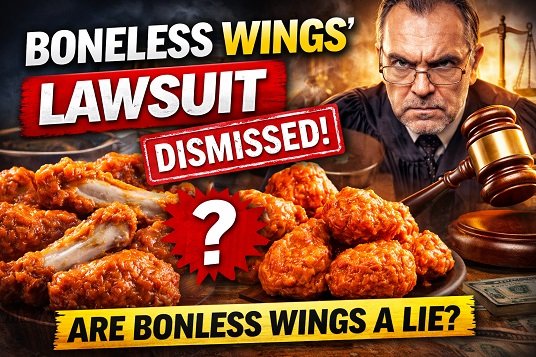
 A quirky legal challenge over the name of a restaurant menu item has made headlines after an Illinois judge threw it out this week. The story might sound light-hearted on the surface, but it taps into deeper issues of consumer expectations, food marketing, and how courts interpret everyday language.
Here’s a clear look at what happened, why the case was brought, and what the judge decided.
What the Case Was About
In March 2023, Illinois resident Aimen Halim filed a lawsuit against Buffalo Wild Wings. He took issue with the restaurant’s popular menu item called “boneless wings”. Halim’s claim was simple: he believed the term suggested he was buying chicken wings with the bones removed, but the item he got was instead made from chicken breast meat —– essentially akin to a chicken nugget. Because of this, Halim argued that he was misled and paid more than he would have if he knew the truth. He sought monetary damages and asked the court to force changes in how the item is marketed.
The lawsuit included claims under the Illinois Consumer Fraud Act and other common law theories such as breach of warranty and unjust enrichment. It was framed as a nationwide class action, meaning it sought to represent many customers who felt similarly misled.
Why People Thought It Was Misleading
To a lot of consumers, the phrase “boneless wings” evokes a very specific image — a chicken wing stripped of its bones. Instead, in many restaurants, including Buffalo Wild Wings, these menu items are made from chicken breast cut into bite-sized pieces, deep-fried, and tossed in sauce.
Halim’s position was that this difference between expectation and reality was enough to be considered deceptive advertising. He said that if he had known the meat was not from a wing, he either wouldn’t have bought it or would have expected a lower price.
This debate isn’t entirely new. The term “boneless wings” has been a talking point among food lovers and commentators for years, even becoming a viral topic in 2020 when a man famously asked a city council to ban the term entirely.
What the Judge Decided
On February 17, 2026, a U.S. District Court in Chicago dismissed the lawsuit. Judge John Tharp Jr. ruled that the plaintiff failed to show that a reasonable consumer would be misled by the phrase “boneless wings.” In his opinion, using that name for chicken breast pieces is a “fanciful” and widely understood term in the restaurant industry, not deceptive marketing. He noted that most consumers don’t literally expect all menu names to describe exact ingredients (for example, “cauliflower wings” don’t contain wing meat).
In a memorable moment from the ruling, the judge even wrote that the lawsuit “has no meat on its bones,” poking fun at the central issue of the case.
Halim was given a chance to amend his complaint by March 20, 2026, in case he can add more factual details. But based on the judge’s comments, it appears unlikely that a revision would change the outcome.
Why This Matters (Even If It Seems Light-Hearted)
On its surface, this lawsuit might sound amusing — a food fight taken to federal court. But the decision actually touches on how consumer protection laws work in real life.
Here are a few key points to take away:
● Legal standards for deception are high. To win a case like this, a plaintiff must prove that a reasonable person would actually be misled by the wording or marketing. Judges often consider common usage and industry norms.
● Language matters less than context. Courts look at whether the average buyer would be confused, not whether a term is technically precise. That’s why familiar terms like “boneless wings” can be defended even if they aren’t literal.
● Food culture and marketing intersect. Menu labeling and food descriptions are part of branding, not just literal facts. Consumers have become accustomed to certain terms over time.
What Happens Next
For now, the case is closed with the dismissal. If Halim files an amended complaint with new evidence, the judge could consider it. But until then, Buffalo Wild Wings and other restaurants can continue using the term “boneless wings” on their menus without legal change.
Whether you see them as chicken nuggets or just a flavorful menu staple, the debate over boneless wings has been settled — at least in the eyes of the law.

Satyakam Pradhan is a professional law content writer with extensive experience in creating clear, well-researched, and reader-friendly legal content. With a strong understanding of laws and legal procedures.