 By Satyakam
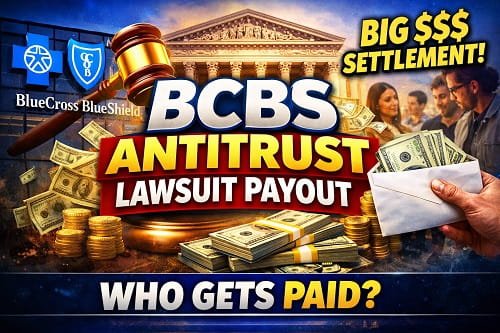
 The BCBS antitrust lawsuit payout is one of the largest class-action settlements ever seen in the U.S. health insurance industry. It involves Blue Cross Blue Shield, a group of independent insurance companies operating under a shared brand.
At the center of the case was a simple but serious allegation: that Blue Cross Blue Shield plans agreed not to compete with each other, leading to higher premiums and fewer choices for customers. After nearly a decade of legal battles, the case ended in a multi-billion-dollar settlement that is now making headlines again as payouts move closer.
This article explains what the BCBS antitrust lawsuit payout is, who qualified for it, how much money is involved, and why it matters beyond just the checks.
What Is the BCBS Antitrust Lawsuit?
The lawsuit was first filed in 2012 by individuals, businesses, and other organizations that bought health insurance from Blue Cross Blue Shield companies. The plaintiffs claimed that BCBS plans violated U.S. antitrust laws by dividing the country into exclusive service areas.
In plain terms, each BCBS insurer allegedly agreed to stay out of other regions. That meant less competition. And when competition drops, prices usually rise. The lawsuit argued that customers ended up paying more than they should have for health insurance.
Blue Cross Blue Shield denied these allegations. However, instead of continuing a long and costly trial, both sides agreed to settle.
How Much Is the BCBS Antitrust Lawsuit Payout?
The total settlement amount is $2.67 billion. This makes it one of the largest antitrust settlements in U.S. history that did not involve a government agency bringing the case.
Not all of that money goes directly to policyholders. After deducting legal fees, court costs, and administrative expenses, roughly $1.9 billion is set aside for eligible claimants.
The rest covers the cost of running the settlement and paying attorneys who handled the case over many years.
Who Was Eligible for the Payout?
The BCBS antitrust lawsuit payout applies only to people and organizations that met specific conditions.
Eligible groups included:
● Individuals who purchased Blue Cross Blue Shield health insurance during the covered years
● Employers and businesses that provided BCBS insurance to employees
● Groups that paid premiums under fully insured or self-funded plans
However, eligibility alone was not enough. Claimants also had to file a claim before the deadline, which was November 5, 2021. Anyone who did not submit a claim by that date is not eligible to receive money from the settlement.
How Much Money Will People Actually Receive?
There is no fixed payout amount. The money is divided based on several factors, including:
● How long the policyholder had BCBS coverage
● How much they paid in premiums
● Whether the coverage was individual, group, or employer-sponsored
● The total number of approved claims
Some individuals may receive relatively small amounts, while larger employers that paid high premiums over many years could receive significantly more.
Payments are expected to be issued in phases, with many claimants likely receiving funds in 2025 or 2026, depending on processing and final court approvals.
Why Did Blue Cross Blue Shield Settle?
Settling does not mean admitting guilt. For large organizations like Blue Cross Blue Shield, settlements are often a way to reduce uncertainty and avoid years of appeals.
This case had already dragged on for almost a decade. Continuing would have meant more legal costs and no guaranteed outcome for either side. The settlement allowed BCBS to close the case and move forward while agreeing to certain business practice changes.
Why the BCBS Antitrust Lawsuit Matters
The impact of the BCBS antitrust lawsuit payout goes beyond compensation. It sends a strong message about competition in the healthcare industry.
Health insurance is not just another product. It affects medical access, affordability, and financial stability for millions of people. When competition is limited, consumers usually pay the price.
This settlement also forces structural changes within the Blue Cross Blue Shield system, encouraging more competitive behavior in the future.
Key Takeaways
● The BCBS antitrust lawsuit payout comes from a $2.67 billion settlement
● Around $1.9 billion is being distributed to eligible claimants
● Only those who filed claims before November 5, 2021 qualify
● Payout amounts vary based on premiums paid and coverage type
● Payments are expected to roll out in 2025–2026
● The case highlights the importance of fair competition in health insurance
The BCBS antitrust lawsuit payout is a reminder that even the largest insurance systems are not above scrutiny. While the money helps compensate past policyholders, the bigger win may be the push toward a more competitive and transparent healthcare market.

Satyakam Pradhan is a professional law content writer with extensive experience in creating clear, well-researched, and reader-friendly legal content. With a strong understanding of laws and legal procedures.