
 By Satyakam
 Starbucks, the company known for its lattes, frappuccinos and global café presence, is now at the center of a high-profile class-action lawsuit that’s grabbed the public’s attention in early 2026. At its core, the case isn’t just about legal arguments — it raises questions about trust, marketing claims, and consumer expectations in a world where ethical branding is increasingly important.
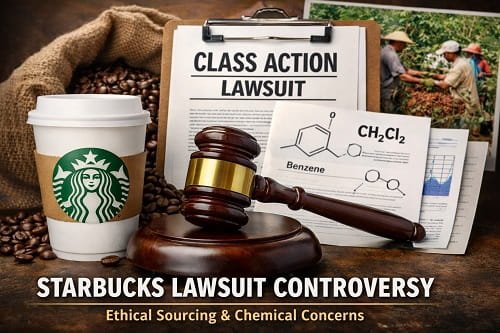
The lawsuit was filed in the U.S. District Court for the Western District of Washington on January 13, 2026, by two consumers, Jennifer Williams and David Strauss, and represents a broader group of Starbucks buyers. According to the complaint, Starbucks allegedly misled shoppers on two major fronts: the ethical sourcing of its coffee and the undisclosed presence of certain chemicals in at least one of its decaffeinated products.
Clear Claims at the Heart of the Case
At its simplest, the lawsuit argues Starbucks failed to live up to what it promised on its packaging and in its marketing.
1. Ethical Sourcing Promises Under Scrutiny
Starbucks has long used the tagline “Committed to 100% Ethical Coffee Sourcing” on its coffee packaging and in promotions. Consumers who choose Starbucks coffee often do so believing that this pledge means fair treatment of workers, safe conditions throughout the supply chain, and strong environmental standards.
The lawsuit says that this claim paints an overly rosy picture. It points to years of investigations by journalists, worker advocates, and even government bodies that have alleged labor abuses and human rights violations on farms certified under Starbucks’ own Coffee and Farmer Equity (C.A.F.E.) Practices program — the company’s proprietary system for assessing suppliers. These alleged issues include unsafe working conditions and inadequate housing for workers.
Plaintiffs argue that Starbucks continued to source beans from these farms without telling customers what was happening on the ground, while still promoting the idea of a fully ethical coffee supply chain. This, they say, misled consumers who paid a premium price under the assumption that their coffee met high ethical standards.
2. Chemicals in Decaf Coffee: An Omission or a Concern?
On the product side, the lawsuit goes into another sensitive area: what’s actually in the coffee people drink. Independent testing cited in the complaint detected volatile organic compounds (VOCs) — including methylene chloride, benzene and toluene — in samples of Starbucks’ Decaf House Blend medium roast.
These chemicals are associated with industrial solvents and are not something most consumers expect to find in their morning brew. The suit does not claim Starbucks violated federal food safety laws, nor does it say the company’s products were unsafe under existing regulations. Rather, it says that failing to disclose these substances was a material omission — something a reasonable shopper would want to know before buying.
What Sparked the Sudden Buzz Around This Case
This lawsuit caught fire in news cycles and online conversations for a couple of reasons.
First, it touches on issues people care about: ethical production and product transparency. Many consumers choose brands based not just on taste, but on values — like fair labor practices and honesty about what’s in a product. When those claims are questioned, people take notice.
Second, the case comes on the heels of other legal actions and heightened scrutiny around corporate sustainability claims. Starbucks was already facing a similar lawsuit filed in 2024 by the National Consumers League over “100% ethical” sourcing claims — and that case survived early attempts to dismiss it, suggesting courts are willing to dig into these marketing issues.
Finally, the combination of alleged human rights concerns and unexpected chemicals in a consumer staple makes for eye-catching headlines — even among people who don’t follow legal news. That mix has helped the story spread quickly across news sites and social networks.
Starbucks’ Response and the Bigger Picture
Starbucks has publicly denied the claims in the lawsuit. A company spokesperson said in comments to media that the allegations misrepresent both its sourcing practices and the integrity of its C.A.F.E. Practices program, and emphasized that the coffee it sells meets applicable safety standards.
Whether the court agrees with Starbucks or the plaintiffs will play out over months, maybe years. But the case already highlights a few broader trends:
- Consumer expectations are evolving.People want more than just a logo or slogan. They want evidence that what brands promise is backed up by independent verification and real accountability.
- Marketing claims matter — legally.Calling something “100% ethical” may sound good in an ad, but courts could decide that vague or unverified language crosses a line into deception.
- Product transparency is becoming non-negotiable.Even if a substance is legal to use, not telling customers about it can open a company to legal challenges if it could have influenced a buying decision.
Conclusion: More Than Just a Coffee Lawsuit
Starbucks’ class-action lawsuit is more than another entry on a legal docket. It’s a clash between marketing narratives and customer expectations in a world where people are paying closer attention to what they buy, how it’s made, and what’s really inside the products they trust. Whether this case leads to changes in how Starbucks communicates with consumers or how companies broadly approach ethical claims, it’s already shaping an important conversation about transparency, trust and modern consumer culture.

Satyakam Pradhan is a professional law content writer with extensive experience in creating clear, well-researched, and reader-friendly legal content. With a strong understanding of laws and legal procedures.