
 By Satyakam
 Trevor Noah, the South African comedian and longtime host of the Grammy Awards, is at the center of a new legal feud. Former U.S. President Donald Trump has publicly threatened to sue Noah after a joke made during the 68th Grammy Awards sparked outrage and accusations of “defamation.” The situation has become one of the biggest entertainment news stories of the year — blending comedy, politics, and questions about free speech.
What Sparked the Lawsuit Threat?
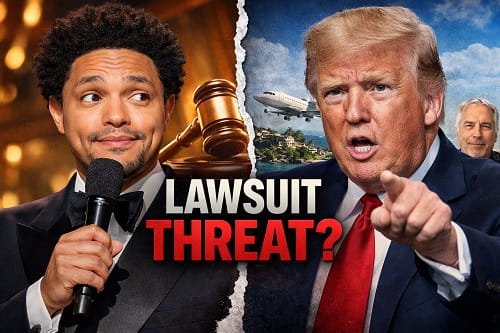
On February 1, 2026, Noah took the stage as host of the Grammy Awards in Los Angeles for what he said would be his final year in that role. In his opening monologue, he wove humor, pop culture, and politics together. The moment that drew the most attention was a joke linking Trump to convicted sex offender Jeffrey Epstein’s private island, an allegation Trump vehemently denies.
Noah quipped, in reference to the Grammy for Song of the Year, “That’s a Grammy that every artist wants — almost as much as Trump wants Greenland. Which makes sense because Epstein’s island is gone, he needs a new one to hang out with Bill Clinton.” It was a quick hit of satire, but one that hit a nerve.
Moments later, Trump took to his social platform Truth Social to respond with fury. He called Noah a “poor, pathetic, talentless dope” and insisted the comedian had made a “false and defamatory” claim. In his post, Trump wrote that he had never been to Epstein’s island — and suggested he would take legal action.
Trump’s Reaction: Lawsuit or Loud Threat?
Trump’s public message had two clear parts: insult the joke, then promise repercussions. He didn’t file a lawsuit right away, but made it clear his lawyers would be brought in. The post included sharp words aimed not just at Noah, but also at the Grammy Awards themselves, calling the show “the worst, virtually unwatchable.”
What makes this more than a celebrity feud is Trump’s previous history of litigation. He’s gone after news networks, personalities, and media companies before. That history gives weight to his threat, even if no actual lawsuit has been filed yet.
Critics and legal experts have weighed in, saying suing a comedian over a joke would be a steep uphill battle. In the U.S., satire and comedic commentary — especially about public figures — are generally protected under the First Amendment. Courts often treat jokes and exaggerated remarks differently from factual claims that cause real harm.
Free Speech vs Defamation: Where’s the Line?
At the heart of this situation is a classic tension: How far can comedy go when it touches on real people? Defamation laws exist to protect individuals from false statements that damage their reputation. But satire has long been a safe harbor in American law, especially when it involves public figures.
Legal experts point out that comedy shows, late night monologues, and award show hosts routinely make biting remarks about politicians. Unless a statement is presented as a deliberate falsehood stated as fact — not a joke — it’s unlikely to qualify as defamation in court.
Noah’s joke about Trump and Epstein was framed as satire, and many viewers understood it in that context. But Trump’s reaction suggests he views it differently. If legal action were actually filed, lawyers would likely question whether the comment could be reasonably interpreted as a provable false statement. Time will tell if this escalates beyond threats.
Past Lawsuit: Noah as Plaintiff
Interestingly, Trevor Noah himself is no stranger to the legal system. In late 2021, he filed a medical malpractice lawsuit against a surgeon and the Hospital for Special Surgery in New York. According to the complaint, Noah claimed that botched surgery in 2020 led to “permanent, severe, and grievous injuries.” He sought damages and alleged negligence on the part of the medical professionals involved.
That case was a civil claim aimed at compensation for harm, and it shows Noah understands how lawsuits work from the plaintiff’s side. But being on the defensive, as he is now, is a very different position.
Public Reaction and What Comes Next
Since the Grammys aired, social media and news outlets have exploded with commentary. Some defend Noah’s right to joke and criticize political figures. Others argue people should be careful about mixing entertainment and serious allegations. Still more see Trump’s reaction as predictable given his outspoken nature.
At this point, no formal lawsuit has been filed against Trevor Noah. Lawyers for both sides have not publicly confirmed any filings. What’s clear is that this incident has reignited debates about comedy, politics, and how far jokes can go in a polarized world.

Satyakam Pradhan is a professional law content writer with extensive experience in creating clear, well-researched, and reader-friendly legal content. With a strong understanding of laws and legal procedures.