
The landscape of accident investigation has been fundamentally transformed by a suite of cutting-edge technological tools, ranging from ubiquitous dashcams and sophisticated drones to the crucial data captured by a vehicle’s black box. This technological revolution has dramatically enhanced how motor vehicle and motorcycle crashes are analyzed, moving beyond traditional methods that often relied on limited physical evidence and witness testimony.
This pivotal shift has a dual impact. Primarily, it allows investigators to determine fault and causation with unprecedented clarity and precision. The ability to recreate accident scenes virtually, analyze precise speed, braking, and steering inputs, and view a continuous, high-definition record of events cuts through ambiguity and second-guessing.
Most importantly for those in accidents, this power shift empowers victims to present substantially stronger, undeniable evidence in both insurance claims and subsequent legal disputes. The days of insurance companies doing everything they can to deny a claim are gone. Though they may still try, but when faced with clear video footage, detailed 3D scene models, and irrefutable digital data, an insurance company or opposing counsel has far less room to contest the facts.
Key Technologies That Support Personal Injury Cases
In the past, personal injury cases relied heavily on eyewitness statements, skid marks, and vehicle damage. The transition from relying solely on eyewitness accounts to employing evidence-based investigations acknowledges the fallibility of human memory and the potential for contamination in eyewitness testimonies. While eyewitnesses can provide valuable information, investigations now prioritize rigorous procedures to minimize errors and ensure accuracy in evidence collection.
Here are some of the most groundbreaking technologies reshaping how we understand and reconstruct vehicle accidents.
1. Dashcams
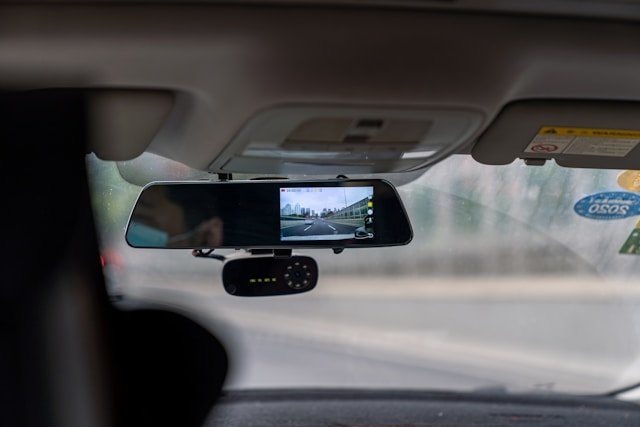
Dashcams are one of the most commonly used tools in accident investigations. Installed in both personal and commercial vehicles, these small cameras capture real-time footage before, during, and after a crash. They provide video evidence of how the collision occurred, help verify driver behavior, such as speeding or distracted driving, and reduce fraudulent or exaggerated claims.
In many cases, dashcam footage can determine who had the right of way, whether someone ran a red light, or if one or more parties engaged in reckless driving.
2. Vehicle Event Data Recorders (Black Boxes)
Nearly all modern vehicles have EDRs that record critical information — speed, brake status, seatbelt usage, and force of impact — in the seconds leading up to and during a crash. This data provides an objective, time-stamped narrative of driver inputs and vehicle performance.
3. Drones
Police departments and accident reconstruction experts are increasingly using drones to capture aerial images and 3D models of crash scenes.
Their advantages include quick deployment, the ability to survey large or dangerous accident scenes safely, and high-resolution images that help recreate crash dynamics. Especially useful in multi-vehicle accidents or motorcycle crashes, drones provide perspective and detail that ground-level photography can miss.
4. Advanced Simulation Software and AI
Artificial intelligence and machine learning tools are helping investigators simulate accident scenarios based on available data. These systems consider factors like road geometry, vehicle dynamics, and driver response time to reconstruct what likely happened. AI can process complex datasets to suggest cause-and-effect scenarios and help identify contributing factors like blind spots or visibility issues. It is often used in court or settlement discussions to support or challenge claims.
AI can help identify subtle contributing factors, analyze complex traffic patterns moments before the crash, and run simulations to validate hypotheses about the sequence of events.
5. Mobile Phone Data and Telematics
Smartphones and vehicle telematics systems also play a growing role in crash analysis. Data from navigation apps, ride-sharing platforms, and onboard vehicle systems can track GPS locations, time of impact, driver behavior before the crash, and acceleration or braking patterns. In motorcycle accidents, especially where rider vulnerability and sudden impacts are common, this data helps explain how quickly a crash escalates.
How This Technology Benefits Everyone
The integration of technology into accident investigations offers significant benefits for all parties involved:
| Benefit | Impact |
| Faster claims resolution | Objective data speeds up insurance and legal processes. |
| Improved road safety | Insights from crash patterns help improve infrastructure and policy. |
| Fairer settlements | More accurate reconstructions support equitable compensation. |
| Less reliance on memory | Reduces disputes caused by conflicting eyewitness accounts. |
If an accident leaves a person unable to work, overwhelmed by medical bills, or dealing with long-term disabilities, this technology provides the documentation necessary to secure full and fair compensation not just for physical injuries, but also for lost income, pain and suffering, and future care needs.
For those involved in accidents caused by another party’s negligence, these tools offer a level of protection and accountability that didn’t exist a decade ago, and in the hands of experienced attorneys, they become powerful assets in the pursuit of justice.
With the rise of autonomous vehicles, real-time road sensors, and connected infrastructure, car accident investigations will continue evolving. As these innovations become more mainstream, the balance of accident accountability will continue shifting away from assumption and toward evidence-based justice.

Our dedicated team gathers information from all the reliable sources to make the law accessible and understandable for everyone. We provide the latest legal news stories from across the country, delivered straight to you.