
There’s a moment after a motorcycle accident that changes your life forever.
The initial collision might last seconds, but the crash waves from that point forward can last for months, even years. That is true for both your physical injuries, as well as emotional ones.
Sure, you’ll focus on the obvious damages like the broken bones, the road rash, the hospital bills, and the other tangible injuries that are the result of a motorcycle crash.
But there’s one aspect of your recovery process that no one really talks about…
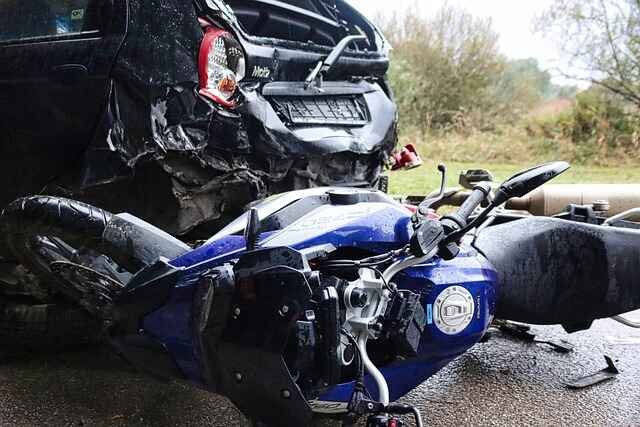
The emotional trauma that a motorcycle accident leaves behind. In many ways, it can be worse than the actual physical recovery.
In this article you’ll learn about:
- Emotional trauma after motorcycle accidents
- PTSD symptoms after motorcycle accidents
- Motorcycle accident depression
- Motorcycle accident anxiety
The Scars Motorcycle Accidents Leave Behind
Physical injuries heal.
Your broken ribs, your cuts and road rash, your casts and crutches all have a timetable for recovery.
The emotional trauma from your motorcycle accident? That’s a whole other ballgame.
What you need to know is that when someone gets involved in a motorcycle accident, between 10-20% of them will develop either depression or post-traumatic stress disorder.
These statistics aren’t just numbers, they are real people with real problems that can take over their lives in a number of ways.
Imagine this for a second. One minute you’re cruising down the road, two wheels and an open road your one true love. The next minute your life is flipped upside down by sudden trauma.
The kind of trauma that leaves scars you can’t see.
PTSD After Motorcycle Accidents
You may think that post-traumatic stress disorder is only something that happens to soldiers and veterans.
In reality, PTSD is something that anyone can develop in the aftermath of a trauma, which is exactly what a motorcycle accident is.
PTSD can occur after a motorcycle accident because they are jarring, shocking and violent. If the crash was sudden, unexpected and if there was a great deal of loss of control during it, these are all ingredients for someone to experience PTSD after their motorcycle crash.
Post-traumatic stress disorder will present in a number of different ways. You may experience flashbacks that come out of nowhere and hit you like a ton of bricks.
You may experience nightmares where you relive the accident over and over again. You may find yourself constantly thinking about your crash when you least expect it.
You may start to avoid things or places that remind you of your motorcycle accident. In the worst of cases you may feel constantly on edge or like something bad is about to happen.
But the worst thing about PTSD after your motorcycle accident?
Is that you may start to fear riding, something that you once loved to do with all your heart.
Every time you close your eyes, you can see the accident again and again, as if it is playing on repeat in your mind. Every noise is something to startle you, every crash of thunder makes your heart jump in your chest.
It’s not weakness, it’s your mind trying to make sense of the trauma it wasn’t designed to process.
Depression Hits Riders Hard After Crashes
Depression after a motorcycle accident is all too common.
In fact, if you suffered a traumatic brain injury, it gets even worse. Studies show that 50% of TBI victims are diagnosed with major depression within the first year after the accident, with over 60% diagnosed 7 years after their accidents.
If you can’t comprehend the statistic, let me break it down in a simpler way.
Depression is super common in those with brain injuries from motorcycle accidents. It’s not about feeling down or being sad for a few days or a week. It’s about life changing depression that will impact everything.
Depression after a motorcycle accident doesn’t just come from the emotional trauma of the crash. It’s a side effect of the physical injuries that also come into play.
Physical pain and suffering doesn’t just go away, even with proper healing. It’s a factor, too. You might not be able to work as hard or as often as you were before the crash. Relationships can be tested.
Money can run short as financial stress adds up. Not to mention the scariest part about depression after your motorcycle accident:
You might not be able to ride again.
Riding is your identity as a motorcyclist, that’s what makes you who you are. When that’s gone, it’s a huge blow to your emotional wellbeing.
Motorcycle Accident Anxiety
Anxiety after a motorcycle accident is a very common symptom that isn’t talked about nearly enough.
Yes, it makes sense that you would be more anxious or nervous about riding again after your motorcycle accident.
But what about the anxiety that comes with driving any vehicle? The panic you feel in traffic? Or trying to avoid roads or places that you associate with your motorcycle accident?
The hypervigilance that comes with anxiety after your motorcycle accident. Your brain is on high alert at all times looking for danger everywhere, even when there is none.
Shame, Isolation, and Emotional Trauma After Motorcycle Accidents
Something that most riders are scared to admit:
The shame that comes with emotional trauma after a motorcycle accident.
Riding has a culture and one of the unspoken rules in that culture is you are supposed to be tough.
You crash, you pick yourself up, you dust yourself off and get back on the bike.
But what if you can’t do that?
For a lot of riders, the best thing they can do to mask their emotional trauma after a motorcycle accident is to isolate. Unfortunately, this only makes the problem much worse.
Emotional trauma after a motorcycle accident is not a sign of weakness, it’s a sign of being human.
Help Is The Best Thing You Can Get
If you’re experiencing any emotional trauma after your motorcycle accident, the best thing you can do is seek professional help.
Therapy is a great option for motorcyclists after a crash because it helps them process what happened and move on. A lot of people use cognitive behavioral therapy, which has proven to be really effective for treating accident survivors.
Others may also use medications, particularly for depression and anxiety.
Treatment can consist of working with a trauma therapist, medication when necessary, working with support groups with other survivors, and of course physical rehabilitation. It’s important to note the physical healing helps the emotional recovery.
Expect ups and downs as you recover from emotional trauma after a motorcycle accident. It’s normal, and part of the process. No one just “gets over” a motorcycle accident.
Legal Rights and Emotional Trauma After Motorcycle Accidents
Psychological trauma after a motorcycle accident is not just a figment of your imagination, it’s real.
If you’re seeking compensation for your motorcycle accident, make sure to include your psychological injuries as part of your claim. Depression, PTSD, anxiety, all of these are valid damages that you can recover.
Insurance companies tend to downplay emotional trauma after an accident, but don’t let them get away with it.
A good accident attorney is going to know how debilitating psychological injuries are, as well as how motorcycle accident survivors struggle for months, even years after their crashes.
Your emotional well being costs money, money to visit your doctors, therapists, and counselors. Your lost quality of life is an actual loss as well as your inability to enjoy the activities that you used to.
Final Thoughts On Emotional Trauma After Motorcycle Accidents
Motorcycle accidents are one of the few things you can do that change your life overnight.
The good news is that no matter what the physical recovery process is, but the bad news is that there are often emotional trauma after motorcycle accidents that you need to address.
Whether it’s PTSD, depression, anxiety or some combination of the three you’re dealing with, it’s important to reach out for help.
No one needs to suffer in silence, there is treatment and there are ways to work through the emotional trauma after a motorcycle accident.
Sure, you may have come back from your motorcycle accident physically healed. But remember the mental and emotional wounds that an accident causes.
They are just as important to care for, too.

Our dedicated team gathers information from all the reliable sources to make the law accessible and understandable for everyone. We provide the latest legal news stories from across the country, delivered straight to you.