
No, corporal punishment is illegal in schools and child care institutions in India, but within the home it exists in a legal grey area.
This is one of those issues where the answer changes depending on where it happens. Indian law is very strict when it comes to schools and institutions, but it takes a softer, more complex approach inside families. To understand it clearly, you need to look at both sides separately.
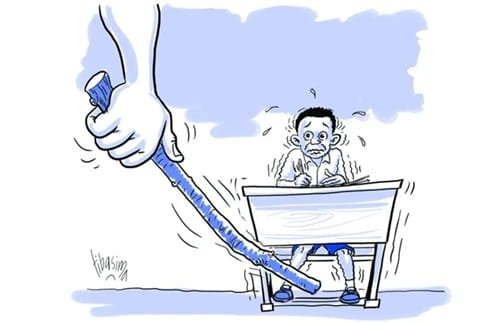
Corporal Punishment in Schools: Strictly Illegal
In India, corporal punishment in schools is completely banned.
1. Right to Education Act, 2009
Under the Right to Education (RTE) Act, 2009:
- Section 17 clearly prohibits
- Physical punishment
- Mental harassment
This applies to:
- Government schools
- Private schools
No exception is allowed.
2. Juvenile Justice Act, 2015
The Juvenile Justice (Care and Protection of Children) Act, 2015 makes it even stricter.
- Any person in charge of a child (teacher, staff, caretaker) cannot use corporal punishment
Punishment includes:
- First offense → Fine up to ₹10,000
- Repeat offense → Up to 3 months imprisonment
3. NCPCR Guidelines
The National Commission for Protection of Child Rights has issued clear guidelines.
Even actions many people consider “mild” are illegal, such as:
- Making a child stand for long periods
- Holding ears as punishment
- Locking a child in a room or toilet
- Verbal humiliation
So the law is not just about beating—it covers emotional harm too.
At Home: A Legal Grey Area
This is where things become complicated.
1. No Direct Ban on Parents
There is no specific law in India that clearly bans parents from physically disciplining their children at home.
This is why it is often called a “grey area.”
2. The “Good Faith” Protection
Under the Bharatiya Nyaya Sanhita (BNS), 2023:
- Section 27 protects actions done in “good faith” for the benefit of a child under 12
This means:
- A parent may claim they acted for discipline, not harm
This provision acts as a legal shield in many cases.
3. The Clear Boundary
However, this protection has limits.
If the action:
- Causes visible injury
- Becomes excessive or cruel
- Leads to mental or physical harm
Then it can be treated as a crime.
Parents can be charged under:
- Juvenile Justice Act
- BNS sections related to causing harm
Recent Updates (2025–2026)
1. Kerala High Court Observation (2026)
In a recent case (Sibin S.V. v. State of Kerala, February 2026):
- The court noted that teachers should avoid physical punishment
- It mentioned that “minimal force” without bad intention may not always be criminal
However:
- It still violates school rules
- It does not make corporal punishment legal
2. Bharatiya Nyaya Sanhita (BNS) Implementation
India replaced the old IPC with the Bharatiya Nyaya Sanhita (BNS), 2023.
Now:
- Causing harm can lead to charges under newer sections (like 115, 118)
- Penalties include fines and imprisonment
This applies to both:
- Teachers
- Parents (if harm is serious)
Why Corporal Punishment Is Banned in Schools
1. Child Safety
Children are vulnerable. Physical punishment can:
- Cause injury
- Create fear
- Damage trust
2. Mental Health Impact
Even “small” punishments can lead to:
- Anxiety
- Low confidence
- Long-term emotional issues
3. Modern Education Standards
Today’s system focuses on:
- Positive discipline
- Communication
- Emotional development
Violence has no place in this model.
Common Misunderstandings
“Light punishment is okay in school”
Not true. Even mild actions are illegal.
“Parents can do anything at home”
Also wrong. Once it crosses into harm or cruelty, it becomes punishable.
“It’s for discipline, so it’s allowed”
Intent alone does not justify harm under the law.
Ethical and Social Perspective
There is a clear shift in thinking.
- Earlier, corporal punishment was seen as normal
- Today, it is viewed as harmful and unnecessary
Society is moving toward:
- Respectful parenting
- Non-violent discipline
Practical Understanding
Here’s the simplest way to see it:
- School or institution → Completely illegal
- Home (mild discipline) → Grey area
- Any form causing harm → Illegal
Final Thoughts
Corporal punishment in India is no longer accepted in schools or institutions—it is clearly banned and punishable. At home, the law still allows some room under “good faith,” but that space is limited and shrinking.
If discipline turns into harm, the law steps in.
The direction is clear: India is moving away from physical punishment and toward safer, more respectful ways of guiding children.

Our dedicated team gathers information from all the reliable sources to make the law accessible and understandable for everyone. We provide the latest legal news stories from across the country, delivered straight to you.